
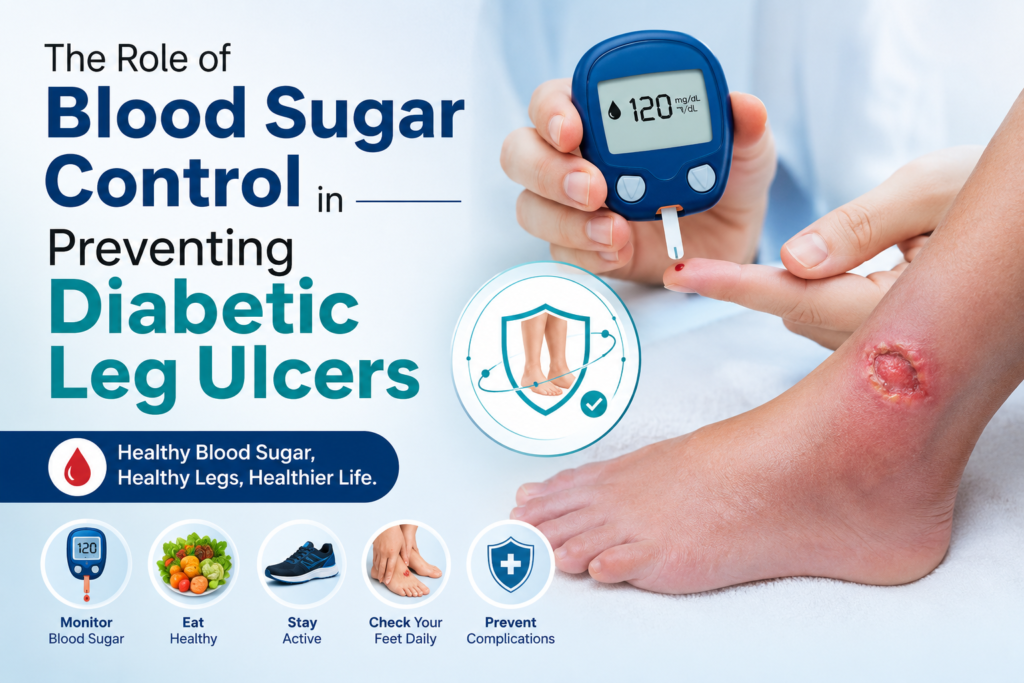
The Role of Blood Sugar Control in Preventing Diabetic Leg Ulcers
Living with diabetes requires more than monitoring your blood sugar levels—it involves taking proactive steps to protect your overall health, including your legs and feet. One of the most serious complications associated with diabetes is the development of a diabetic leg ulcer. These wounds may seem minor initially, but if left untreated, they can become infected, delay healing, and even increase the risk of amputation.
The good news is that maintaining healthy blood sugar levels significantly reduces the chances of developing diabetic leg ulcers. By understanding how high blood glucose affects your body and adopting healthy lifestyle habits, you can protect your legs, feet, and long-term well-being.
What Is a Diabetic Leg Ulcer?
A diabetic leg ulcer is an open wound or sore that develops on the lower leg, ankle, or foot due to complications caused by diabetes. These ulcers occur because prolonged high blood sugar damages nerves and blood vessels, reducing sensation and limiting blood flow to the affected area.
Without proper circulation and nerve function, even a small cut, blister, or scratch can progress into a chronic wound that heals very slowly.
Diabetic leg ulcers are considered a serious medical concern because they increase the risk of:
- Skin and soft tissue infections
- Bone infections (osteomyelitis)
- Gangrene
- Hospitalization
- Lower limb amputation
Early detection and effective diabetes management play a critical role in preventing these complications.
How High Blood Sugar Leads to Diabetic Leg Ulcers
Consistently elevated blood glucose levels affect nearly every system in the body. Over time, this damage creates the perfect environment for ulcer formation.
1. Nerve Damage (Diabetic Neuropathy)
High blood sugar damages peripheral nerves, especially in the legs and feet. As sensation decreases, people may not notice:
- Cuts
- Burns
- Pressure sores
- Blisters
- Injuries from ill-fitting footwear
Without pain as a warning signal, these minor injuries can worsen unnoticed and eventually develop into a diabetic leg ulcer.
2. Poor Blood Circulation
Diabetes contributes to narrowing and hardening of blood vessels, reducing oxygen-rich blood flow to the lower limbs.
Poor circulation results in:
- Slower wound healing
- Reduced delivery of nutrients
- Increased risk of tissue damage
- Greater susceptibility to infection
Healthy blood sugar levels help protect blood vessels and improve circulation.
3. Weak Immune Response
Elevated glucose weakens the body’s natural immune defenses.
As a result:
- Bacteria multiply more easily
- Wounds become infected quickly
- Healing takes significantly longer
This combination increases the likelihood that a small wound develops into a diabetic leg ulcer.
Why Blood Sugar Control Matters
Maintaining blood glucose within the target range benefits your entire body, especially your legs and feet.
Effective blood sugar control helps:
- Reduce nerve damage
- Improve blood circulation
- Strengthen immune function
- Accelerate wound healing
- Lower inflammation
- Reduce infection risk
- Prevent ulcer recurrence
Studies consistently show that people who maintain healthy blood sugar levels experience fewer diabetic complications compared to those with poorly controlled diabetes.
Warning Signs of a Diabetic Leg Ulcer
Early recognition improves treatment outcomes.
Watch for:
- An open sore on the leg, ankle, or foot
- Redness around the wound
- Swelling
- Drainage or pus
- Unpleasant odor
- Blackened tissue
- Delayed healing
- Warm skin surrounding the ulcer
Some individuals may not experience pain due to diabetic neuropathy, making regular skin inspections essential.
Daily Habits That Help Prevent Diabetic Leg Ulcers
Preventing diabetic leg ulcers starts with consistent daily care.
Monitor Blood Sugar Regularly
Checking blood glucose as advised by your healthcare provider helps identify fluctuations early and allows timely adjustments in treatment.
Follow Your Diabetes Treatment Plan
Take medications or insulin exactly as prescribed.
Never skip doses or change medications without consulting your healthcare provider.
Eat a Balanced Diet
A healthy diet supports stable blood sugar and improves healing.
Focus on:
- Whole grains
- Lean proteins
- Fresh vegetables
- High-fiber foods
- Healthy fats
- Fruits in moderation
Limit:
- Sugary beverages
- Refined carbohydrates
- Processed foods
- Excessive saturated fats
Stay Physically Active
Regular exercise improves:
- Blood sugar control
- Blood circulation
- Weight management
- Heart health
Aim for at least 150 minutes of moderate physical activity each week, or as recommended by your doctor.
Perform Daily Leg and Foot Checks
Inspect your legs and feet every day for:
- Cuts
- Scratches
- Swelling
- Skin discoloration
- Blisters
- Dry skin
- Cracks
Use a mirror if necessary or ask a family member to help examine hard-to-see areas.
Wear Protective Footwear
Choose shoes that:
- Fit comfortably
- Reduce pressure points
- Prevent friction
- Provide adequate support
Avoid walking barefoot, even inside your home.
Keep Skin Moisturized
Dry, cracked skin creates an entry point for bacteria.
Apply a moisturizer daily while avoiding excessive moisture between the toes.
Quit Smoking
Smoking further restricts blood flow and delays wound healing.
Quitting smoking improves circulation and lowers the risk of diabetic complications, including diabetic leg ulcers.
Managing Other Health Conditions
Blood sugar isn’t the only factor involved in preventing diabetic leg ulcers.
Managing these conditions also reduces your risk:
- High blood pressure
- High cholesterol
- Obesity
- Kidney disease
- Peripheral artery disease
Routine health check-ups help identify problems before complications develop.
When Should You See a Doctor?
Seek immediate medical attention if you notice:
- A wound that doesn’t improve within a few days
- Increasing redness or swelling
- Drainage or foul odor
- Fever
- Black or dead tissue
- Severe pain (if sensation is intact)
Never attempt to treat a diabetic leg ulcer at home without professional medical guidance.
Prompt treatment can prevent serious complications and improve healing outcomes.
Professional Treatment for Diabetic Leg Ulcers
Healthcare providers may recommend:
- Comprehensive wound assessment
- Debridement (removal of dead tissue)
- Advanced wound dressings
- Antibiotics if infection is present
- Pressure offloading techniques
- Blood sugar optimization
- Vascular evaluation
- Custom footwear
- Regular wound monitoring
A multidisciplinary approach often provides the best results for healing and preventing recurrence.
Long-Term Benefits of Good Blood Sugar Control
Maintaining healthy blood sugar offers benefits beyond preventing diabetic leg ulcers.
It also reduces the risk of:
- Kidney disease
- Vision loss
- Heart disease
- Stroke
- Peripheral neuropathy
- Poor circulation
Most importantly, it helps preserve mobility, independence, and overall quality of life.
Simple daily habits—healthy eating, regular exercise, medication adherence, and proper leg and foot care—can significantly reduce the risk of diabetes-related complications.
Conclusion
A diabetic leg ulcer is one of the most preventable yet serious complications of diabetes. While nerve damage, poor circulation, and weakened immunity all contribute to ulcer formation, maintaining good blood sugar control remains one of the most effective ways to reduce your risk.
By monitoring your blood glucose levels, following your treatment plan, eating a balanced diet, staying physically active, inspecting your legs and feet daily, and seeking prompt medical attention for any wounds, you can significantly lower the chances of developing diabetic leg ulcers and their associated complications.
If you notice any persistent wound or unusual changes in your legs or feet, don’t delay seeking professional care. Early diagnosis and timely treatment can protect your health, improve healing, and help you maintain an active, independent lifestyle.
For expert diabetic wound care and personalized treatment, consult Dr. Uday Ravi at Happy Diabetic Foot and Podiatry Center, where comprehensive diabetic foot care is focused on preventing complications, promoting faster healing, and preserving long-term mobility.
Frequently Asked Questions (FAQs)
1. What is a diabetic leg ulcer?
A diabetic leg ulcer is an open wound or sore that develops due to poor circulation and nerve damage caused by diabetes.
2. Can blood sugar control prevent diabetic leg ulcers?
Yes. Keeping blood sugar levels under control helps reduce the risk of diabetic leg ulcers by protecting nerves and improving circulation.
3. What are the early signs of a diabetic leg ulcer?
Common signs include redness, swelling, a non-healing wound, drainage, or skin discoloration on the leg or foot.
4. How can I prevent diabetic leg ulcers?
Monitor your blood sugar, inspect your feet daily, wear proper footwear, eat a healthy diet, and attend regular medical check-ups.
5. When should I see a doctor?
Consult a doctor immediately if you notice a wound that isn’t healing, shows signs of infection, or becomes increasingly painful or swollen.