
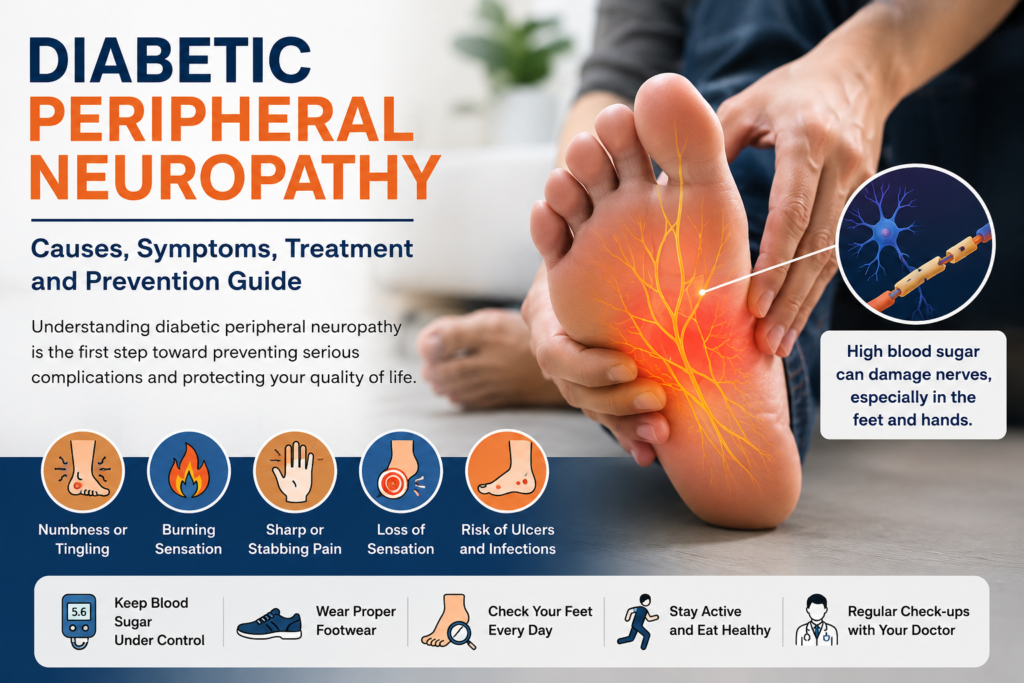
Complications of Diabetic Peripheral Neuropathy
If diabetic peripheral neuropathy is not diagnosed and managed promptly, it can lead to serious health complications. Because nerve damage reduces the ability to feel pain, even small injuries may go unnoticed and become severe over time.
Diabetic Foot Ulcers
Reduced sensation in the feet makes it difficult to notice cuts, blisters, or pressure sores. Without proper care, these injuries can develop into foot ulcers that are slow to heal.
Foot Infections
Open wounds can become infected if left untreated. Severe infections may spread to deeper tissues or bones, requiring specialized wound care and antibiotics.
Charcot Foot
Long-term nerve damage can weaken the bones and joints in the foot, causing swelling, deformity, and instability. Early diagnosis helps prevent permanent damage.
Balance Problems
Loss of sensation in the feet affects coordination and balance, increasing the risk of falls, particularly in older adults.
Amputation
In advanced cases, untreated ulcers and infections may lead to tissue death, making amputation necessary. Fortunately, routine foot examinations and early treatment greatly reduce this risk.
Treatment Options for Diabetic Peripheral Neuropathy
Although damaged nerves cannot always be completely repaired, early treatment can slow the progression of diabetic peripheral neuropathy, relieve symptoms, and reduce the risk of complications.
1. Maintain Healthy Blood Sugar Levels
Controlling blood glucose is the most effective way to protect your nerves. Your healthcare provider may recommend:
- Diabetes medications or insulin
- Regular HbA1c monitoring
- Continuous glucose monitoring (CGM)
- A balanced, diabetes-friendly diet
- Regular physical activity
Keeping blood sugar within your target range can help prevent further nerve damage.
2. Medications for Nerve Pain
If you experience pain caused by diabetic peripheral neuropathy, your doctor may prescribe medications such as:
- Pregabalin
- Gabapentin
- Duloxetine
- Amitriptyline (for selected patients)
Always take these medications only under medical supervision.
3. Physical Therapy and Exercise
Regular exercise helps improve circulation, strengthens muscles, enhances balance, and supports blood sugar control. Physical therapy may also help improve mobility and reduce discomfort associated with nerve damage.
4. Daily Foot Care
People with diabetic peripheral neuropathy should inspect their feet every day for cuts, blisters, redness, swelling, or nail problems. Wash your feet with lukewarm water, dry them carefully, moisturize dry skin, and wear clean, well-fitting footwear. Avoid walking barefoot, even indoors.
5. Healthy Lifestyle Choices
Simple lifestyle changes can help slow nerve damage and improve overall health:
- Eat a nutritious, balanced diet.
- Maintain a healthy body weight.
- Quit smoking.
- Limit alcohol intake.
- Control blood pressure and cholesterol.
- Stay physically active.
Can Diabetic Peripheral Neuropathy Be Prevented?
While not every case can be prevented, the risk of developing diabetic peripheral neuropathy can be significantly reduced through good diabetes management.
Here are some practical prevention tips:
- Monitor your blood sugar levels regularly.
- Keep your HbA1c within your target range.
- Exercise for at least 150 minutes each week.
- Follow a healthy eating plan.
- Wear protective, well-fitting footwear.
- Never ignore cuts, blisters, or swelling.
- Schedule routine diabetic foot examinations.
- Avoid smoking and excessive alcohol consumption.
Preventive care is the best way to protect your nerves and maintain healthy feet.
When Should You See a Doctor?
Consult a healthcare professional if you notice:
- Persistent numbness or tingling
- Burning or sharp pain in the feet
- Loss of balance
- Muscle weakness
- Foot wounds that heal slowly
- Skin discoloration
- Swelling or redness
- Cracks, blisters, or ulcers
- Difficulty walking
Early diagnosis and treatment can help prevent serious complications and improve your quality of life.
Frequently Asked Questions (FAQs)
1. What is diabetic peripheral neuropathy?
Diabetic peripheral neuropathy is nerve damage caused by prolonged high blood sugar levels. It most commonly affects the feet and legs, leading to numbness, tingling, burning pain, and reduced sensation.
2. Can diabetic peripheral neuropathy be cured?
Existing nerve damage is usually not reversible. However, maintaining healthy blood sugar levels and following an appropriate treatment plan can slow disease progression and relieve symptoms.
3. What are the first symptoms?
Early symptoms often include tingling, numbness, burning sensations, or reduced feeling in the toes and feet. Some people also experience sharp pain or increased sensitivity to touch.
4. Why is foot care important?
Because diabetic peripheral neuropathy reduces sensation, small injuries may go unnoticed. Daily foot care helps prevent ulcers, infections, and other serious complications.
5. How often should diabetic patients have a foot examination?
People with diabetes should have a comprehensive foot examination at least once a year. Those with diabetic peripheral neuropathy or previous foot problems may require more frequent check-ups.
Conclusion
Diabetic peripheral neuropathy is one of the most common complications of diabetes, but early diagnosis and proper management can make a significant difference. Recognizing symptoms such as numbness, tingling, or burning pain, maintaining healthy blood sugar levels, and practicing daily foot care are essential for protecting nerve health.
If you experience symptoms of diabetic peripheral neuropathy, seek medical advice without delay. Regular check-ups, timely treatment, and healthy lifestyle habits can help reduce the risk of ulcers, infections, and long-term complications, allowing you to maintain better mobility and overall well-being.
About Dr. Uday Ravi – Foot Care Expert, Bangalore
Dr. Uday Ravi specializes in diabetic foot care, wound management, peripheral neuropathy assessment, and preventive foot health. His patient-centered approach focuses on early diagnosis, personalized treatment, and education to help people with diabetes reduce the risk of foot complications and maintain an active lifestyle.