
Comprehensive Guide to Charcot Foot, Corns, Calluses, Ingrown Toenails & Toe Deformities in Diabetic Patients
1. Charcot Foot in Diabetes
Introduction
Charcot Foot is a severe diabetic foot condition caused by nerve damage (neuropathy) leading to weakening of bones, joints, and soft tissues. The deformity like unstable and swollen foot and may become permanent if not treated early. Charcot foot is an emergency condition, limb-threatening and should be attended immediately by expert podiatrist, as the patient needs offloading.
Causes
Charcot foot occurs due to a combination of:
- Peripheral neuropathy (loss of sensation)
- Repeated microtrauma to bones/joints that goes unnoticed
- Poor circulation (PAD)
- Weak bones due to diabetes
- Long-standing uncontrolled blood sugar
Risk increases in:
- Older diabetics
- Long-duration diabetes
- History of ulcer or foot injury
Symptoms
- Redness & swelling of foot
- Warm foot compared to other side
- Instability while walking
- Sudden change in foot shape
- Rocker-bottom deformity in late stages
- Minimal or no pain despite severe deformity
Diagnosis
- Clinical examination by foot specialist
- X-ray to check fractures, deformities
- MRI for early bone changes
- Vascular assessment (ABI, Doppler)
- Temperature comparison between both feet
Treatment
Early treatment prevents deformity and amputation.
1. Offloading
It Reduces pressure on bones & joints. Methods of offloading are
- Total Contact Cast (TCC)
- CAM(Controlled Ankle Motion) walker boot
- Non-weight bearing until swelling reduces
2. Medications
- Drugs to improve bone density (in selective cases)
- Anti-inflammatory medicines
3. Custom Footwear
- Diabetic shoes
- Rocker-bottom soles
- Custom insoles
4. Surgical Treatment
It is required in advanced cases. Surgical management like
- Bone realignment
- Joint stabilization
- Correction of deformity
- Internal or external fixation
2. Corns & Calluses in Diabetic Patients
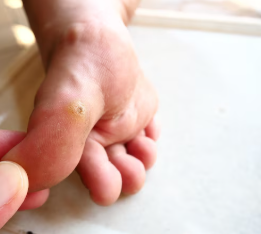
Corns
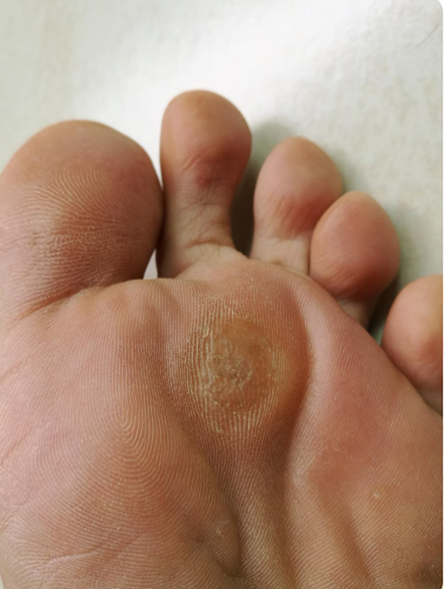
Calluses
Introduction
The continuous friction or pressure makes the skin thick and hardened called corn and callus. Corn and calluses increases foot pressure and can easily break down into ulcers in diabetics.
Causes
- Ill-fitting footwear
- Toe deformities (hammer/claw toe)
- High-pressure points on sole
- Abnormal gait due to neuropathy
- Dry skin
- Poor foot hygiene
Symptoms
- Hard thick skin on toes or soles
- Pain while walking
- Burning sensation
- Skin cracking
- Ulcer under the callus
Diagnosis
- Foot pressure assessment
- Podiatric examination
- X-rays for deformities
- Foot scan for pressure mapping
Treatment
1. Debridement
It is done to remove thickened skin to reduce pressure & pain
2. Offloading
- Custom insoles
- Diabetic footwear
- Toe pads or silicone protectors
3. Treating Underlying Cause
- Correcting deformities
- Changing footwear
- Moisturizing therapy
4. Surgery
Surgery is needed for severe deformities causing recurrent corns/calluses
3. Ingrown Toenail in Diabetics
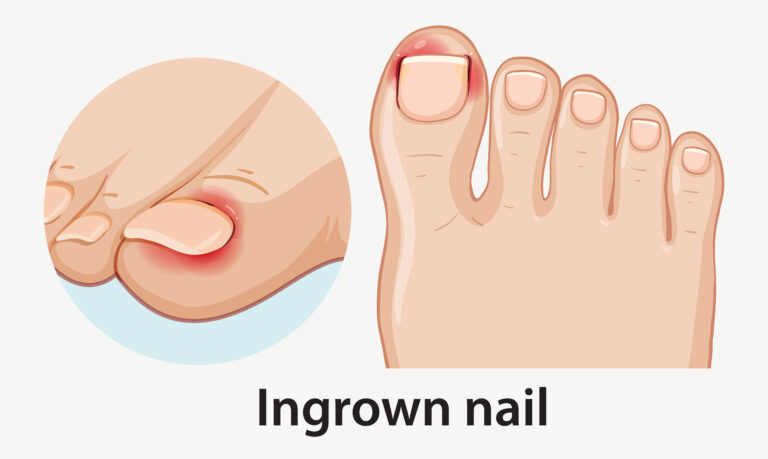
Introduction
The nail edge grows into the surrounding skin leading to Ingrown toenail. In diabetics, it can rapidly lead to infection, pus formation, and ulcers, making early care essential.
Causes
- Improper nail trimming
- Tight footwear
- Toe deformities
- Repeated trauma
- Fungal nail infections
Symptoms
- Pain around nail
- Swelling
- Redness
- Pus discharge
- Difficulty walking
- Fever in advanced infections
Diagnosis
- Clinical examination
- Rule out infection
- X-ray to check bone involvement
- Culture test if pus is present
Treatment
1. Conservative Care
- Warm water soaks
- Antibiotics if it is infected
- Pain relief medicines
2. Nail Corner Removal
- Partial nail avulsion
- Chemical cauterization (phenolization)
3. Surgical Correction
- Nail bed correction
- Permanent removal for recurrent cases
4. Footwear Advice
- Wide toe-box diabetic shoes
4. Toe Deformities – Hammer Toe & Claw Toe in Diabetes
Introduction
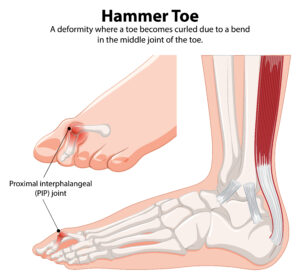
Hammer toe and claw toe are structural deformities where toes bend abnormally due to muscle imbalance, neuropathy, and pressure. They increase the risk of corns, calluses, ulcers, and difficulty walking.
Causes
- Diabetic neuropathy
- Weak foot muscles
- Tight tendons
- Ill-fitting shoes
- Previous ulcers or injuries
- Charcot changes
Types Hammer Toe
Toe bends downward at the middle joint.
Claw Toe
Toe bends at both middle and end joints, resembling a claw.
Symptoms
- Bent or curled toes
- Corns over joints
- Pain while walking
- Difficulty wearing shoes
- Ulcers over deformed areas
Diagnosis
- Clinical foot examination
- X-rays to check structural deformity
- Foot pressure scan
Treatment
1. Conservative Management
- Toe splints
- Padding for corns
- Custom orthotics
- Physiotherapy exercises
- Diabetic shoes with extra depth
2. Offloading
It is very crucial as this helps in reducing pressure on feet and prevents ulcers.
3. Surgical Correction
It is done for severe deformities. Surgery done are
- Tendon lengthening
- Joint release
- Bone straightening
- Fixation with screws/pins